





Lowering springs vs. coilovers: What is the best choice?
If you're considering lowering your car, you'll inevitably face the choice between lowering springs and coilovers. Both options have their own advantages, but which one best suits your needs and driving style? Let's take a closer look at what lowering springs and coilovers are and how to determine which option is the right fit for you.
What are lowering springs?
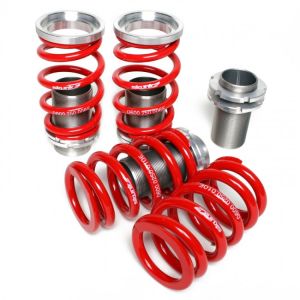
Lowering springs, as the name suggests, are springs designed to lower your car's ride height. They replace your car's standard springs and are designed to bring the vehicle closer to the ground. The result? A sportier look, improved driving performance, and a lower center of gravity, which enhances stability in corners.
Advantages of lowering springs:
- Affordable: Lowering springs are generally cheaper than coilovers, making them an accessible option for anyone looking to lower their car without breaking the bank.
- Easy installation: They are relatively easy to install, often without the need for additional modifications.
- Improved handling: By lowering the center of gravity, your car's handling improves, especially noticeable in corners.
Disadvantages of lowering springs:
- Limited adjustability: Once installed, lowering springs do not offer options for adjusting ride height or damping.
- Reduced comfort: Depending on the springs chosen, they can reduce ride comfort, particularly on rough roads.

What are coilovers?
Coilovers are a complete spring and damper combination that offers more control and adjustability than lowering springs. With coilovers, you can not only adjust your car's ride height but often also the damping and spring characteristics, allowing you to fine-tune your car's setup to suit your personal preferences or specific driving conditions.
Advantages of coilovers:
- Full adjustability: Coilovers allow you to adjust the ride height, damping, and in some cases, even the camber of the wheels, enabling a fully customizable setup for your car.
- Enhanced performance: They often provide superior driving performance compared to lowering springs, especially if you plan to take your car to the track.
- Improved stability: Coilovers offer even better control and stability, particularly in high-speed corners or during aggressive driving.
Disadvantages of coilovers:
- Higher cost: Coilovers are generally more expensive than lowering springs, making them less accessible for budget-conscious car enthusiasts.
- More complex installation: Installing coilovers is more complex and often requires precise adjustments to ensure optimal performance.

Which choice is best for you?
The decision between lowering springs and coilovers depends on your specific needs, budget, and driving preferences.
Choose lowering springs if:
- You are primarily looking for a lower ride height and a sportier appearance.
- You have a limited budget and are looking for a cost-effective solution.
- You mainly use your car for daily driving and don’t need extensive adjustability..
Opt for coilovers if:
- You want maximum control and adjustability over how your car drives and performs.
- You regularly drive on the track or plan to participate in track days.
- You are willing to invest in a high-quality suspension upgrade for better performance.
-
 Regular Price €439.00 Special Price €417.05
 -
 Regular Price €439.00 Special Price €417.05
 -
 Regular Price €439.00 Special Price €417.05


